Article
WHAT MAKES A GREAT COMMUNITY
Jul 13, 2026
Article
Jul 13, 2026
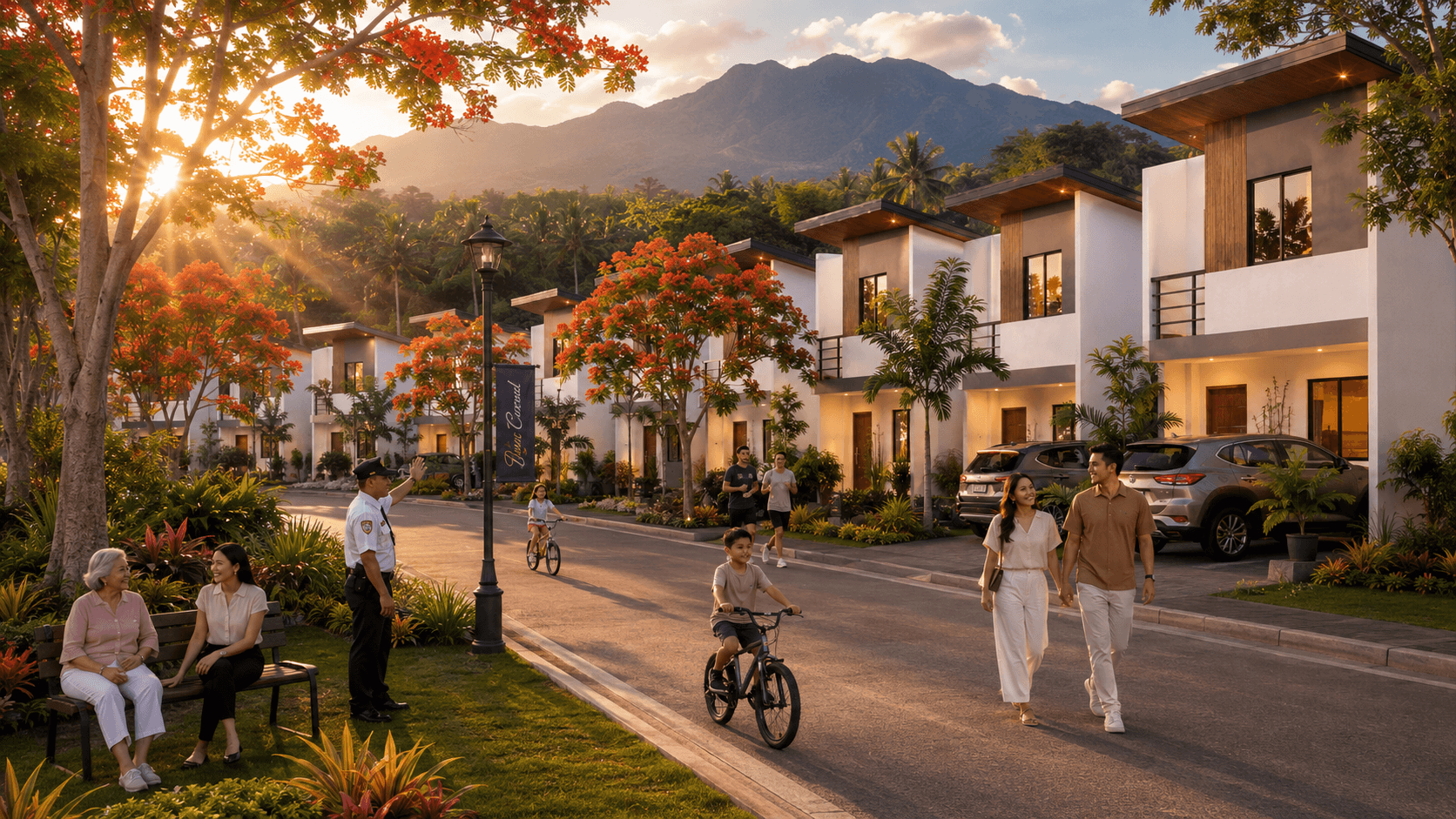
Ask someone about the happiest years of their life.
Rarely do they begin by describing the size of their house.
Instead, they remember the people.
The neighborhood.
The trees they climbed.
The street where they learned to ride a bicycle.
The park where they played until sunset.
The neighbors who became family.
The places we love are rarely defined by buildings alone.
They are defined by the lives lived within them.
A Community Is Shared.
A beautiful home can bring comfort.
But a great community brings belonging.
It is the difference between simply owning property and truly feeling at home.
Communities succeed when people know one another.
When children can safely play outside.
When older adults enjoy evening walks.
When neighbors greet each other by name.
When people feel they belong.
The most admired communities around the world share common qualities.
They have parks.
Tree-lined streets.
Walkable neighborhoods.
Public spaces.
Local cafés.
Safe sidewalks.
Schools nearby.
Places where people naturally meet.
These features are not accidents.
They are the result of thoughtful planning.
One of the quiet tragedies of modern life is that many children spend more time with screens than with nature.
They know video games better than butterflies.
Shopping malls better than forests.
Parking lots better than parks.
A truly great community changes that.
It invites children outdoors.
To run.
To explore.
To discover.
To imagine.
The greatest playground ever created has always been nature.
Trees do something remarkable.
They slow people down.
They create shade where conversations happen.
They cool streets where children ride bicycles.
They become landmarks remembered for generations.
Some of the world’s most beloved neighborhoods are known not for taller buildings, but for older trees.
Communities grow richer when nature grows with them.
They quietly encourage healthier choices.
People walk instead of drive.
Families gather instead of staying indoors.
Children play instead of scrolling.
Older adults remain active.
Neighbors meet naturally.
The design of a neighborhood influences the habits of the people who live there.
Good planning quietly shapes better lives.
Security is not created only by gates and cameras.
It also grows from relationships.
People naturally look after places they care about.
Neighbors notice when something is wrong.
Children know where they are welcome.
Communities become safer when people know one another.
The strongest fence is often trust.
Some developments look impressive on opening day.
Twenty years later they feel forgotten.
The finest communities become more beautiful with time.
Trees become larger.
Gardens mature.
Friendships deepen.
Children return as adults.
Memories accumulate.
The greatest communities appreciate not only in value—
but also in meaning.
Developers often measure success by the number of homes completed.
Perhaps a better question is this:
How many lives became better because this community was built?
Did children grow up happier?
Did families spend more time together?
Did neighbors become lifelong friends?
Did older adults feel less lonely?
Did nature survive alongside progress?
If the answer is yes, then something far more valuable than houses has been created.
A community.
At Carmel, we believe that the measure of a neighborhood is not how many houses fit inside it.
It is how well people live within it.
Every preserved tree.
Every park.
Every shaded pathway.
Every open space.
Every conversation between neighbors.
These are not amenities.
They are investments in human happiness.
Because in the end, people may purchase a house.
But what they truly hope to find is a place where they can build a meaningful life.
That is the difference between building homes—
and building a community.
Not because it talks about houses.
Because it talks about people.
It reminds readers that real estate is ultimately about human lives, not square meters.
I also have an idea that could become Carmel’s lifelong tagline, inspired by these articles:
“We don’t measure success by the number of homes we build, but by the quality of life they create.”